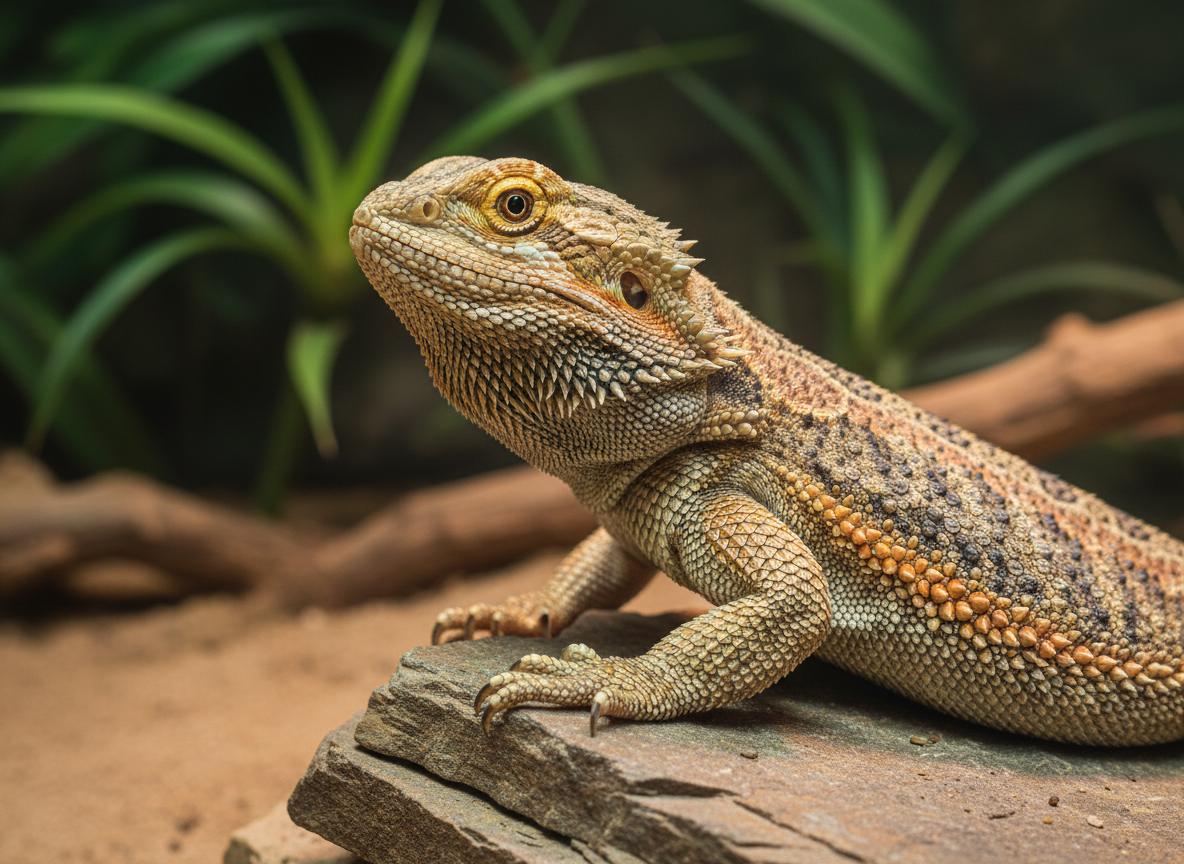
Bearded Dragon
A friendly, docile lizard known for its gentle temperament and distinctive beard display. Ideal for first-time reptile owners.
Difficulty
Lifespan
7–12 years
Diet
Omnivore
Space
Juveniles: 20-gallon long tank. Adults: 40-gallon breeder or larger (e.g., custom 4ft x 2ft x 2ft enclosure).
Overview
The common bearded dragon (Pogona vitticeps) is a hardy medium sized lizard native to central Australia. Fully grown they range in size between 18 and 24 inches in length. They generally live between 7 to 12 years in captivity. They are generally docile and mild mannered making them excellent pets — in fact they are the most popular pet lizards in the world!
Personality & Qualities
Bearded dragons are great for handling and interacting with directly. Consistent handling and interaction helps ensure your dragon remains docile. Note that younger dragons lose body heat much faster than adults, so they should be handled for shorter intervals. They display unique behaviors like arm waving (submission) and head bobbing (dominance or greeting).
Daily Care
Offer fresh greens daily. Feed live insects per the schedule for your dragon's age. Ensure fresh water is available. Inspect and spot-clean the enclosure as needed. Maintain proper lighting for 12–14 hours. Bathe your dragon at least once a week in lukewarm water for 15–20 minutes — never leave unattended in the bath.
Diet
Bearded dragons are fully omnivorous and require live insects, dark leafy greens, and small amounts of fruit. Insects offered should be no larger than the space between the dragon's eyes. Feeding schedule by age: • Neonates: 10–20 appropriately sized insects daily or at least 5 days/week. • Juveniles: 10–15 insects every other day or at least 3 days/week. • Adults: 5–10 insects 2–3 days/week only. Insect feeders include: Dubia Roaches, Crickets, Tomato Worms, Super/Mega Worms, Wax Worms, Butter Worms, Silkworms. Fresh greens should be offered daily at all life stages: Kale, Collard Greens, Mustard Greens, Dandelion Greens, Okra. Fruits & veggies (treats only, 1–2x/week): Watermelon, Mango, Pineapple, Cherries, Grapes, Apples, Bananas, Carrots, Bell Peppers. Bearded dragons rarely drink from standing water — they obtain most hydration from greens and insects. Offer a small water dish. Supplements: Dust insects or greens with calcium (without D3) 2–3x/week. Dust with calcium/multivitamin (with D3) twice a month — at all life stages.
Housing Requirements
Juveniles: 20-gallon long tank. Adults: 40-gallon breeder or larger. Provide branches, faux rocks, and hammocks for enrichment and easier access to the basking area. Include a small water dish to help keep humidity low. Recommended substrates: Paper Towel, Repti Carpet, Slate Tile, or Rabbit Food (adults only). DO NOT keep dragons of any age on sand.
Temperature & Humidity
Basking spot: 100–110°F. Warm side: 90–95°F. Cool side: 80–85°F. Nighttime drop to ~75°F; never below 70°F. Humidity: 30–40% (near-desert conditions — do not over-humidify). Full spectrum UVA, UVB, and basking lighting required.
Common Mistakes
Keeping dragons on sand (impaction risk). Not providing adequate UVA/UVB lighting. Not dusting food with calcium supplements. Offering insects that are too large (no bigger than the space between the eyes). Over-humidifying the enclosure. Neglecting weekly baths. Feeding too many insects to adults.
Vet Care Recommendations
NJ Exotic Pets recommends Paws, Wings & Scales — Christopher F. Stancel, DVM. 125 Paterson Ave, Suite 1, Little Falls, NJ 07424. Phone: (973) 638-1180. Email: pwsanimalhospital@gmail.com. Annual check-ups are highly recommended. Inspect nails at least every 8 weeks — trim if the substrate doesn't naturally file them down.
Things to Know Before Buying
Bearded dragons can become picky with food and often develop favorite feeders or greens. Rotate through a variety of feeders, greens, and treats to keep your dragon engaged at mealtime. Budget for proper UVB lighting, thermostat-controlled heating, and annual vet visits. Ensure your household is comfortable with live insect feeders.
Legal & Responsibility Disclaimer
Bearded dragons are legal to own in all US states. However, owners are fully responsible for providing appropriate care, housing, and veterinary attention. NJ Exotic Pets is not liable for any health issues arising from improper care.
Get This Guide in Your Inbox
Enter your email and we'll send you the complete Bearded Dragon care guide.
Ready to take the next step?
Confirm that you've reviewed the care requirements before proceeding.
Bio-Educational Guidance Only — Consult an Avian/Exotic Veterinarian for Medical Intervention.