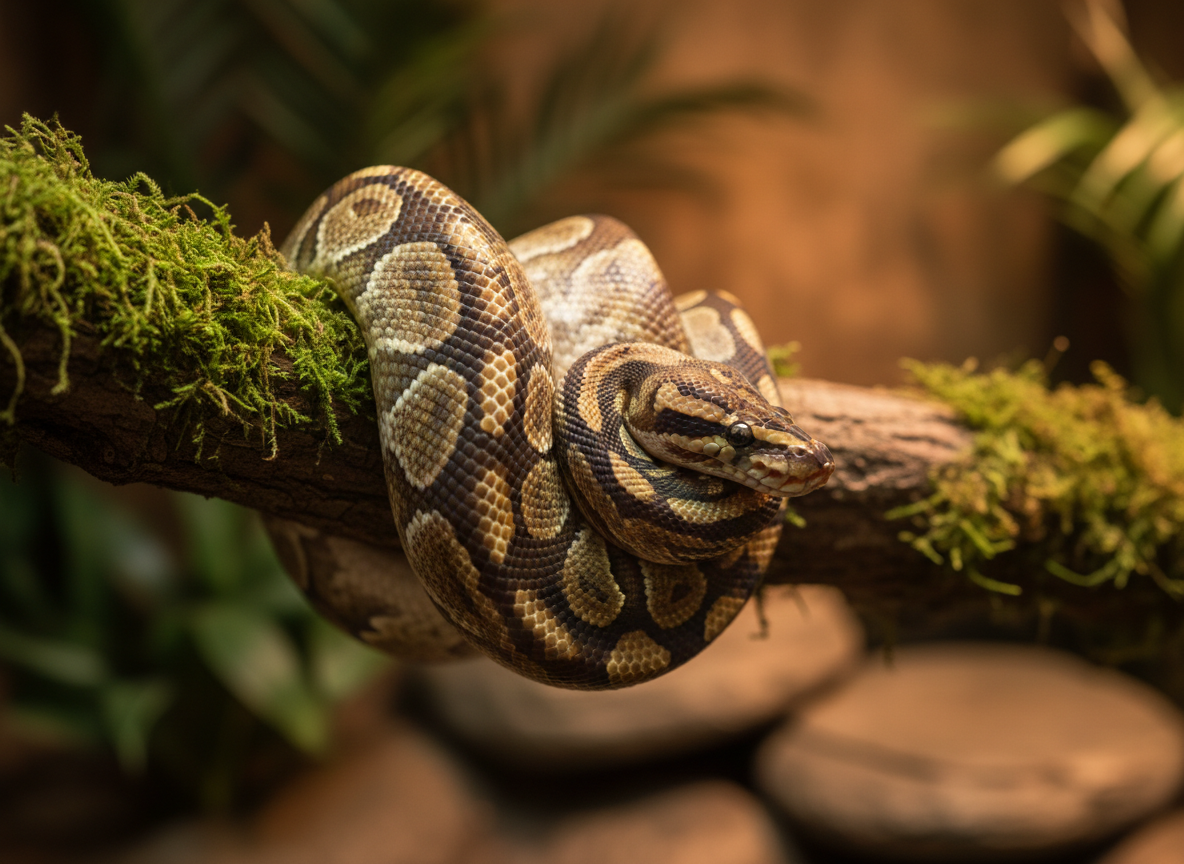
Ball Python
A gentle, slow-moving snake that curls into a ball when nervous. Known for their beautiful morphs and calm temperament.
Difficulty
Lifespan
30+ years
Diet
Carnivore
Space
Hatchlings/Juveniles: 20-gallon long tank or similar tub. Adults: 40-gallon breeder tank or similar tub.
Overview
Ball pythons (Python regius) are a heavy bodied, small to medium sized snake native to West and Central Africa. Fully grown they range in size between 3.5ft to 5ft in total length, with some individuals reaching 6ft, although this is uncommon. They can live upwards of 30 years in captivity. They are generally docile and mild mannered making them excellent pets — in fact they are the most popular pet snake in the world!
Personality & Qualities
Ball pythons are wonderful for handling! Their docile nature makes them an ideal pet to interact with. Keep in mind these are ground-dwelling pythons and they feel most secure when their entire body is supported. When stressed, they curl into a tight ball — hence their name.
Daily Care
Rinse and replenish water daily. Monitor temperature and humidity levels. Mist the enclosure at least once a day. Spot-clean as needed. Handle gently a few times per week — never within 24 hours of feeding.
Diet
Offer appropriately sized food items once a week. The food item should be no thicker/wider than the thickest section of the snake. Juvenile ball pythons typically start on Hopper mice; adults eat small to large rats. Accepted food items: Mice, Rats, African Soft Fur Rats, Chicks. Feed in a separate box/enclosure from their home to help the snake focus on food and avoid accidental substrate ingestion. Replenish water daily. DO NOT HANDLE A SNAKE WITHIN 24 HOURS OF FEEDING.
Housing Requirements
Hatchlings and juveniles can be kept in a 20-gallon long aquarium/terrarium or similar sized tub. Adults require a 40-gallon breeder or larger. Provide at least 2 hide boxes — one on the warm side and one on the cool side. Include a water dish large enough for the snake to soak in. Enclosure ornaments and decorations are recommended enrichment. Recommended substrates: Cypress Mulch, Coconut Husk, mixed mulch and soil substrates, Repti-Carpet, or Paper Towel. Substrate should hold humidity well but not be saturated.
Temperature & Humidity
Hot side: 92°F. Cool side: 78°F. Never drop below 68°F. Humidity: 50–60% at all times, raised to 80% temporarily during shedding. Mist the enclosure at least once daily. Use under-tank heaters and heat mats controlled by thermostats.
Common Mistakes
Handling within 24 hours of feeding, inadequate humidity causing bad sheds, enclosures that are too large without enough hides, using substrates that don't retain humidity, and not feeding in a separate enclosure which can lead to substrate impaction.
Vet Care Recommendations
NJ Exotic Pets recommends Paws, Wings & Scales — Christopher F. Stancel, DVM. 125 Paterson Ave, Suite 1, Little Falls, NJ 07424. Phone: (973) 638-1180. Email: pwsanimalhospital@gmail.com. Annual check-ups are highly recommended.
Things to Know Before Buying
Ball pythons can live 30+ years — a serious long-term commitment. This species is known to be picky eaters; be patient and try different food items. Ensure your household is comfortable with feeding rodents. Budget for proper thermostat-controlled heating equipment. If any problems are encountered, don't hesitate to ask NJ Exotic Pets for help.
Legal & Responsibility Disclaimer
Ball pythons are legal in most jurisdictions but check your local regulations. Owners assume full responsibility for the animal's welfare and proper containment.
Get This Guide in Your Inbox
Enter your email and we'll send you the complete Ball Python care guide.
Ready to take the next step?
Confirm that you've reviewed the care requirements before proceeding.
Bio-Educational Guidance Only — Consult an Avian/Exotic Veterinarian for Medical Intervention.