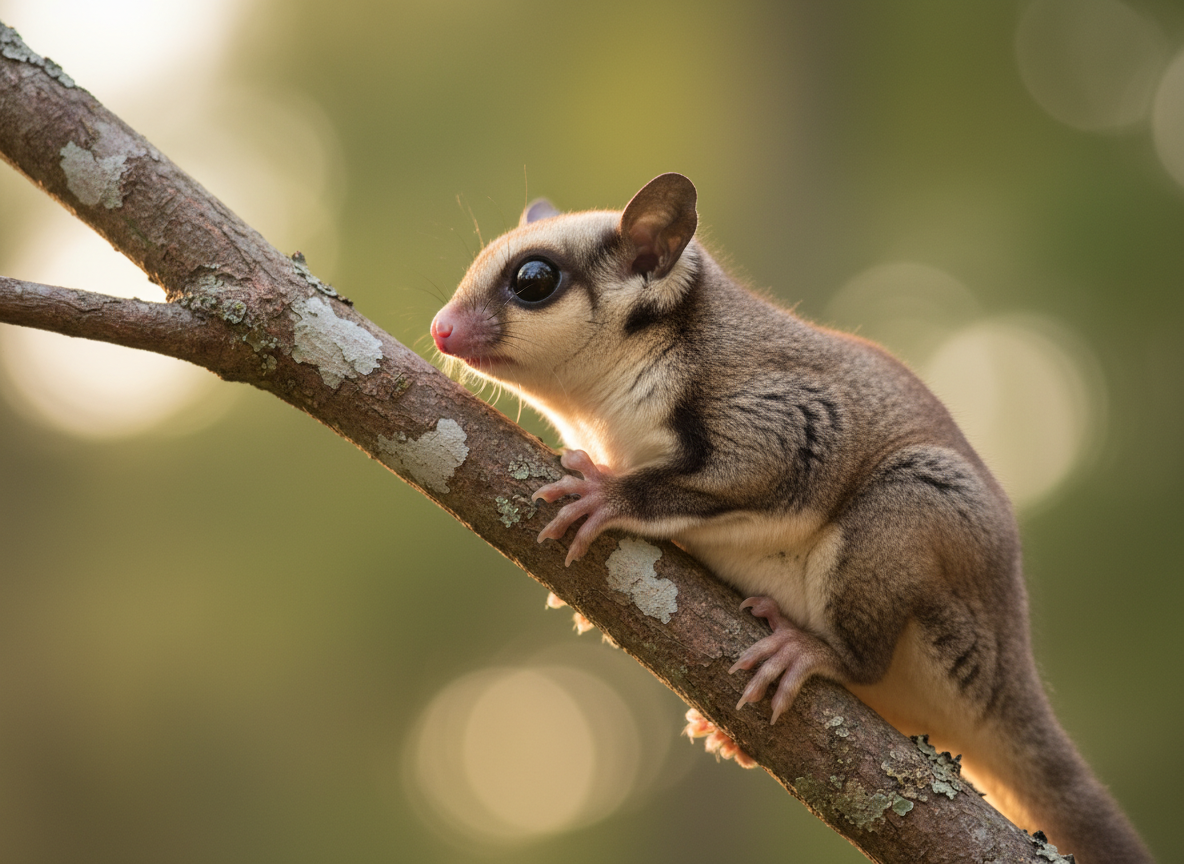
Sugar Glider
A tiny, social marsupial that bonds deeply with its owner. Requires significant daily interaction and specialized care.
Difficulty
Lifespan
12–15 years
Diet
Omnivore
Space
Large tall cage (minimum 24x24x36 inches)
Overview
Sugar gliders (Petaurus breviceps) are small, nocturnal marsupials native to Australia and Indonesia. They are known for the membrane between their wrists and ankles that allows them to glide through the air.
Personality & Qualities
Sugar gliders are incredibly social and form deep bonds with their owners and colony mates. They require several hours of interaction daily. A lonely sugar glider can become depressed and develop self-mutilation behaviors.
Daily Care
Prepare fresh diet daily (specialized sugar glider diet, fresh fruits, vegetables, and protein). Clean food dishes. Provide several hours of out-of-cage bonding time. Clean cage weekly.
Diet
The BML (Bourbon's Modified Leadbeater's) diet or TPG diet are recommended. This includes a blend of honey, eggs, vitamins, and calcium powder served with fresh fruits and vegetables. Avoid chocolate, caffeine, and high-oxalate foods.
Housing Requirements
A tall wire cage (minimum 24x24x36 inches) with multiple levels, branches, pouches, and toys. Bar spacing must be no more than 1/2 inch. Fleece liners are preferred over wood shavings.
Temperature & Humidity
Room temperature 72-80°F. They are sensitive to cold drafts. Humidity should be moderate. Never place cage in direct sunlight or near heating/cooling vents.
Common Mistakes
Keeping a single glider alone, feeding an improper diet (pellets alone are insufficient), using unsafe cage materials, not providing enough bonding time, and underestimating the long-term commitment.
Vet Care Recommendations
Find an exotic vet experienced with sugar gliders before purchasing. Annual wellness exams. Watch for signs of metabolic bone disease, obesity, dental issues, and self-mutilation.
Things to Know Before Buying
Sugar gliders are NOT a low-maintenance pet. They require specialized diets, extensive socialization, and ideally should be kept in pairs. They are nocturnal and will be active (and noisy) at night. Budget for specialized veterinary care.
Legal & Responsibility Disclaimer
Sugar gliders are illegal in some states and cities. Check your local laws before purchasing. Owners are responsible for providing species-appropriate care and socialization.
Get This Guide in Your Inbox
Enter your email and we'll send you the complete Sugar Glider care guide.
Ready to take the next step?
Confirm that you've reviewed the care requirements before proceeding.
Bio-Educational Guidance Only — Consult an Avian/Exotic Veterinarian for Medical Intervention.